Trenching Contractor in St. Paul, MN
Trenching opens a narrow channel in the ground for a pipe, cable, drain or conduit. In Minnesota you must call 811 at least 48 hours before any dig, even a small one in your own yard. If the trench is in the street, a city excavation permit is required before the street is opened. Price depends on length, depth, soil and what has to be put back on top.
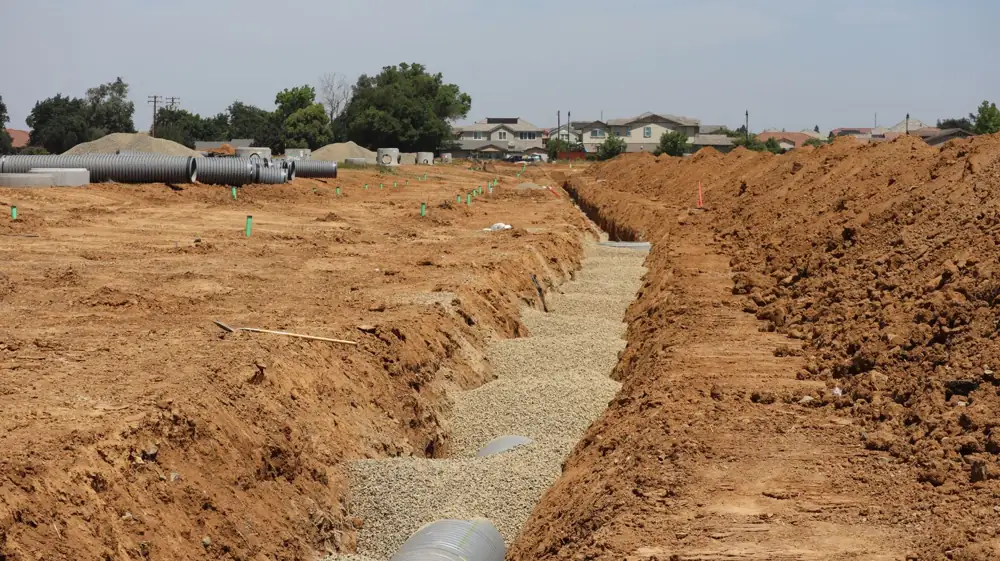
We handle trenching on home and light commercial jobs in St. Paul, from residential blocks off Grand Avenue to properties along University Avenue and West Seventh Street. We dig and backfill. Licensed trades install what goes in the trench, where the law requires it.
Common trenching jobs
- Water service lines to a house, garage or outbuilding
- Electrical conduit and service lines
- Drain tile and drainage lines, including pipe for a downspout or sump discharge
- Data and low-voltage conduit
- Irrigation lines
In most cases, plumbing, electrical and gas work in the trench is done by licensed trades. The city's permit sheet says work on electrical, plumbing, piping and heating or air conditioning systems requires trade permits. The excavator opens the ground and closes it again.
Before the trench: call 811
Minnesota law requires you to notify Gopher State One Call before you dig. Here is what that means in practice:
- Call or file at least 48 hours ahead, not counting the day you call, weekends or holidays, and no more than 14 calendar days before you start.
- It is free and it applies to homeowners, even for a shovel and a garden bed.
- Mark your dig area. Minnesota requires the digging area to be marked with white stakes, flags or spray paint so locators mark only what they need to. With snow on the ground, other colors can be used if the ticket says so.
- Wait for every utility to mark. Do not start until all of them have responded.
- If you hire a contractor, they are responsible for notifying Gopher State One Call. Confirm that it has been done and ask to see the ticket.
Dial 811 or file at gopherstateonecall.org.
Get a free quote in 2 minutes
Describe the job, attach photos if you like, and we will send you a written quote.
Or call now: (651) 419-3733Trench safety
An open trench is dangerous. Two cubic yards of soil weigh about 6,000 pounds, as much as a small car, and cave-ins are the main risk. Minnesota's Department of Labor and Industry says: do not enter an unprotected trench.
What a professional crew follows:
- Trenches five feet deep or more need a protective system (sloping, shoring or a trench box) unless they are dug entirely in stable rock. Trenches 20 feet or deeper need a system designed by a registered professional engineer.
- A competent person inspects the trench every day before anyone goes in, and again when conditions change, for example after rain.
- Ladders or ramps are needed in trenches four feet deep or more.
- Spoil piles stay at least two feet from the edge.
- Crews know where buried lines and overhead power lines are before they dig.
If you are digging a trench yourself, do not work in a deep or unsupported one. Hire a professional.
Trenching in the street or boulevard
If your trench crosses or enters the public street, the City of St. Paul's Department of Public Works controls it, whether it is a quiet block in Highland Park or a busy street like Snelling Avenue or Rice Street.
- Permit first. A contractor or utility must take out an Excavation Permit or a Sewer Service Permit from Public Works before opening the street. The contractor pays for it. The permit must be kept on site, and work must stop after the permit's completion date.
- Neighbors get notice. Abutting property owners must get at least 24 hours' notice of the work.
- Pavement is cut cleanly. Surfaces are saw-cut at least 12 inches beyond the edge of the trench.
- Patching. A temporary asphalt patch must be in place before the street reopens to traffic. Gravel temporary patches are not allowed. If the trench settles after permanent restoration, the city bills the permit holder for the repair.
- Winter. Permanent asphalt restoration runs from April 1 to November 30. Work between November 30 and April 1 gets a temporary patch, and the city makes the permanent repair by July 1. Backfill may not contain frozen material, so winter work may need unfrozen gravel or flowable fill.
- Trees. Rules apply near public trees, including a limit on pit size and a requirement to contact St. Paul Forestry if large roots are hit.
These rules are for the street, not your own yard. Trenching on your own lot does not go through the street-opening permit, but other permits can apply, such as trade permits or a grading permit if the work changes drainage.
How a trench is dug and backfilled
- Plan and mark. Decide the route, depth and what is going in. Mark the dig area and file the 811 ticket.
- Permits. Confirm whether the street, trade or grading permits apply.
- Dig. The machine opens the trench to the specified depth and width. Spoil is kept back from the edge.
- Bed the line. The pipe or conduit goes in on a bedding layer if the installer calls for it.
- Inspect. Required inspections happen before the trench is closed.
- Backfill in layers. Soil or gravel goes back and is compacted. Poor compaction is a common cause of later settling.
- Restore. Lawn, concrete or asphalt is put back.
What trenching costs
Trenching depends on the job: the length and depth of the trench, the soil and what has to be put back on top. A short trench for a water, power or drain line is typically priced by machine time, at about $900 to $3,000. Longer runs, deeper trenches and restoring lawn, concrete or asphalt add to that. Call now for a free quote: (651) 419-3733.
What moves the price:
- Length and depth of the trench
- Soil and obstacles, such as rock, roots and old buried material
- Surface to cut and restore: lawn, concrete or asphalt
- Access for the machine
- Safety measures for deeper trenches
- Street permits if the work is in the right of way
- Season, since frozen ground can change the schedule and price
See our St. Paul excavation cost guide for more.
Get a free quote in 2 minutes
Describe the job, attach photos if you like, and we will send you a written quote.
Or call now: (651) 419-3733Surface restoration
The dig is only half the job. Ask what the quote says about:
- Lawn: topsoil, seed or sod
- Concrete or asphalt: saw-cutting, new base, new surface
- Landscaping: plants or hardscape in the way
Cheap quotes sometimes leave this out.
Mini excavator or trencher?
| Machine | Good for | Watch for |
|---|---|---|
| Walk-behind or ride-on trencher | Long, narrow, shallow runs in open ground | Not suited to rocky or cluttered soil or deep trenches |
| Mini excavator | Deeper or wider trenches, tight spaces, working around obstacles | Can cost more per hour and disturb more surface |
We work with both. If a job needs a machine we do not have, we source it for the job.
Frequently asked questions
Do I need to call 811 for a small trench?
Yes. Minnesota requires notice for any excavation, large or small, and it applies to homeowners. Call or file at least 48 hours before you dig, not counting weekends and holidays. It is free. If you hire a contractor, they are responsible for notifying Gopher State One Call.
Do I need a permit to trench in the street?
Yes. The City of St. Paul requires a contractor or utility to take out an Excavation Permit or a Sewer Service Permit from Public Works before opening the public street. Trenching on your own lot does not use that permit, but other permits can apply.
How deep does a trench need to be?
It depends on what goes in it and the rules for that line. Water, gas, electric and drain lines each have their own requirements. Ask the installer or the utility. Trenches five feet deep or more also need safety protection for workers.
Can you trench in winter?
Often, but frozen ground can change the price and the schedule. In the street, the city does not allow frozen material in backfill, and permanent patches wait until April. Ask for a quote for your date and a later one.
How long does a trench take?
Timing depends on length, depth, soil and restoration. Discuss it when you request your quote.
Ready to get started?
Call now for a free quote, or send the form with a description and photos.
Call now: (651) 419-3733