Demolition Contractor in St. Paul, MN
Taking down a building in St. Paul takes a city permit, utility cut-offs and, for houses, a county inspection before the machine arrives. Homeowners can pull a permit to demolish a garage, but not a house. A house must be taken down under a permit from a contractor the city licenses for wrecking. Costs depend on size, materials, hauling and city fees.
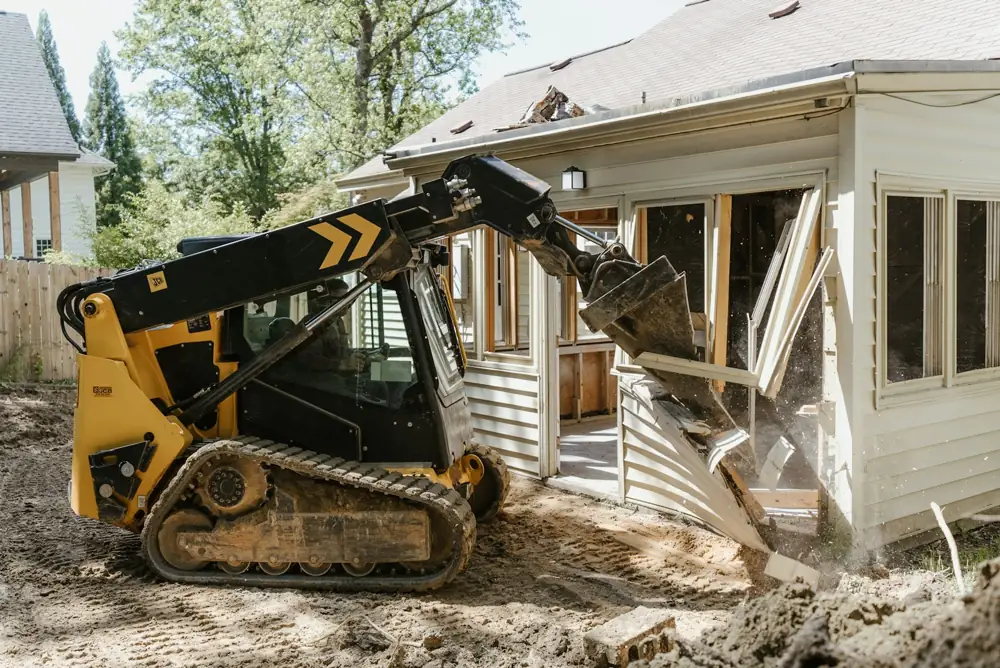
Tell us what you need taken down or removed, and we confirm the scope and permits for your project. We work in neighborhoods like Frogtown, Payne-Phalen, the West Side and Dayton's Bluff. This page walks through what St. Paul requires so you know what to expect.
After the demolition
Many projects are the first step before a rebuild, so see our foundation excavation page for what comes next. Hauling and disposal of debris are a main part of the price, so ask whether they are included in your quote.
St. Paul demolition permit, step by step
The City of St. Paul's Department of Safety and Inspections (DSI) handles demolition permits. Here is how the process works for a house. A garage is simpler, and is covered below.
- Decide who pulls the permit. Licensed wrecking contractors may obtain a permit to demolish dwelling units of any size or commercial buildings. Homeowners cannot pull a permit to demolish a dwelling.
- Disconnect the water. A plumber pulls a permit and cuts off the water service at the property line. The city's Engineering department inspects the cut-off. The water meter is pulled, or a final bill is issued, and once the final bill is paid and the cut-off is inspected, the water utility signs off.
- Check the sewer and address sign-offs. The application needs sign-offs from Public Works for addresses and for sewers.
- Set bait for pests. The city requires baiting for demolition of all structures except residential garages. A pest control company sets the bait, and Animal Control inspects the site 3 days later. The bait is removed at the walk-through. Baiting may not be needed for a dangerous structure.
- Check for heritage status. If the property has a local historic designation, you need a sign-off from the Heritage Preservation Office. If it has none, you do not.
- Get the Ramsey County pre-demolition inspection. The county must complete an inspection for all full house demolitions. It enforces proper recycling or disposal of appliances, asbestos, electronics and other hazardous waste.
- Sign the Construction Management Acknowledgment. For one- and two-unit homes, the contractor submits a signed form with the application. It informs neighbors of the process and how to report violations.
- Submit to DSI. Send the completed application with every sign-off. You must then receive approval from the area building inspector.
- Call 811. Utility lines get marked before the dig. See the 811 note below.
- Demolish, then inspect. Building inspectors take inspection requests by phone on weekday mornings.
The city's online permit portal handles applications. See the DSI demolition permit page for forms, current contact details and the county's inspection page.
Get a free quote in 2 minutes
Describe the job, attach photos if you like, and we will send you a written quote.
Or call now: (651) 419-3733Garage demolition: simpler for homeowners
A homeowner can pull a permit to demolish a residential garage without a license. A garage demolition permit does not need the usual sign-offs, except the Heritage Preservation Office if the property is locally designated. Baiting is not required for residential garages. In older neighborhoods such as Merriam Park and Hamline-Midway, a detached garage often sits right on the alley, which affects how we get a machine in.
Small sheds are different again. The city's permit sheet exempts one-story detached tool and storage sheds up to 200 square feet from the general building permit. Ask DSI to confirm for your shed before you start.
Utilities
- Water. A plumber must cut it off at the property line, and the city inspects it (step 2 above).
- Gas and electric. Plan for gas and electric service to be shut off before work starts. The city's demolition page does not list a gas or electric sign-off, so ask your contractor and your utilities how and when it is done.
- 811. Minnesota requires a ticket to Gopher State One Call at least 48 hours before you dig, not counting weekends and holidays. It applies to homeowners too and it is free.
Asbestos and hazardous materials
Minnesota has rules on asbestos inspection and notification before demolition. Whether a particular building is covered can depend on the building, so do not assume yours is exempt. Ask your contractor how inspection and notice will be handled, and check with the Minnesota Department of Health and the Minnesota Pollution Control Agency.
For houses in Ramsey County, the county's pre-demolition inspection also enforces proper recycling or disposal of appliances, asbestos, electronics and other hazardous waste.
Get a free quote in 2 minutes
Describe the job, attach photos if you like, and we will send you a written quote.
Or call now: (651) 419-3733What demolition costs
Demolition depends on the job. A small garage or shed teardown usually takes a day or two of machine time, which is about $1,700 to $6,100, plus hauling at $400 to $600 or more a truckload and the city's permit fees. A house costs more, and the price depends on size, materials, the foundation and what has to be hauled away. Call now for a free quote: (651) 419-3733.
What moves the price:
- Size and height of the building
- Materials, such as brick, concrete or plaster
- Basement or slab, and how much foundation comes out
- Access, for machines and trucks
- Hauling and disposal of debris
- Hazardous materials that must be handled separately
- Site cleanup and grading afterward
City permit fees (from the city's demolition page). The permit costs $5 per 1,000 cubic feet or fraction of that, with a minimum of $85. A zoning review fee of $90 is charged for each structure, and it can be waived for a garage removed at the same time as the house, or when the demolition makes way for new construction with an active site plan review. The permit form asks for the building's size in cubic feet.
As an illustration only:
- A garage of 24 by 24 feet and 10 feet high is about 5,760 cubic feet. That is $30 by the per-thousand rule, so the $85 minimum applies, plus the $90 zoning fee, for about $175.
- A house of 30 by 40 feet and 25 feet high is about 30,000 cubic feet. That is $150, plus the $90 zoning fee, for about $240.
These are examples of the city's fee formula, not quotes. They leave out the plumber's permit, pest control, the county inspection, asbestos work, hauling and machine time. Confirm fees with the city's Department of Safety and Inspections. See our St. Paul excavation cost guide for more.
What to ask about the foundation
The city's permit form asks what standard applies for removal: total removal, 2 feet below grade, 1 foot below grade or another standard. It also asks whether the building has a basement. Ask your contractor which one is in the quote, since it changes the price and what the lot looks like afterward. If you are building new, ask how the old foundation and any basement will be removed and filled.
After demolition: grading and the next build
Once a building is gone, the lot usually needs backfill, grading and cleanup. If you plan to rebuild, the dig for the new foundation comes next. See foundation excavation.
If you are building on the lot, ask about Sewer Availability Charge credits. The city says one- and two-family dwelling units are assigned 1 SAC credit per unit with no determination needed. Other building types need a determination from the Metropolitan Council.
How to compare demolition quotes
- Is the contractor licensed by the city for wrecking (for a house)?
- Does the price include permits, sign-offs and the plumber's water cut-off?
- Who handles pest baiting, the Ramsey County inspection and asbestos or hazardous waste?
- What is the removal standard for the foundation?
- Where does the debris go, and is hauling in the price?
- What does the lot look like at the end: graded, backfilled, seeded?
- Who calls 811?
Get a free quote in 2 minutes
Describe the job, attach photos if you like, and we will send you a written quote.
Or call now: (651) 419-3733Frequently asked questions
Can I demolish my garage myself in St. Paul?
A homeowner can pull a permit to demolish a residential garage without a license. The permit does not need the usual sign-offs except the Heritage Preservation Office, if the property is locally designated. You still need to call 811 before digging and check with DSI for your situation.
Do I need a permit to demolish a house in St. Paul?
Yes, and a homeowner cannot pull it. A contractor the city licenses for wrecking must apply for the permit. The process includes water cut-off, sign-offs, pest baiting, a Ramsey County inspection and approval from the area building inspector.
How long does the permit take?
We do not have a reliable St. Paul timeline. It depends on how fast sign-offs, the county inspection and the building inspector's approval come through. Ask DSI and your contractor for a realistic schedule before you commit to dates.
Who disconnects the water?
A plumber pulls a permit and cuts off the water at the property line. The city's Engineering department inspects the cut-off, and the water utility signs off once the final bill is paid and the cut-off is inspected.
Do you haul away the debris?
Yes, we haul away the debris. Hauling and disposal are a main part of the price, so ask whether they are included in your quote.
How much does demolition cost in St. Paul?
It depends on size, materials, foundation and hauling. We have not found a reliable St. Paul price, so get a written quote. The city's permit fee is a small part of the total. See our cost guide for general excavation estimates.
Ready to get started?
Call now for a free quote, or send the form with a description and photos.
Call now: (651) 419-3733